PROJECT NOTES / Medical imaging · 3D visualization
Neurosurgical Vascular Reconstruction System
Bring 3D structures and source images into one workspace
Connect MRI, segmentation surfaces, source slices and user annotations so a point in 3D can be traced back to its image coordinates.
01 / THE WORKFLOW
Start with the workflow
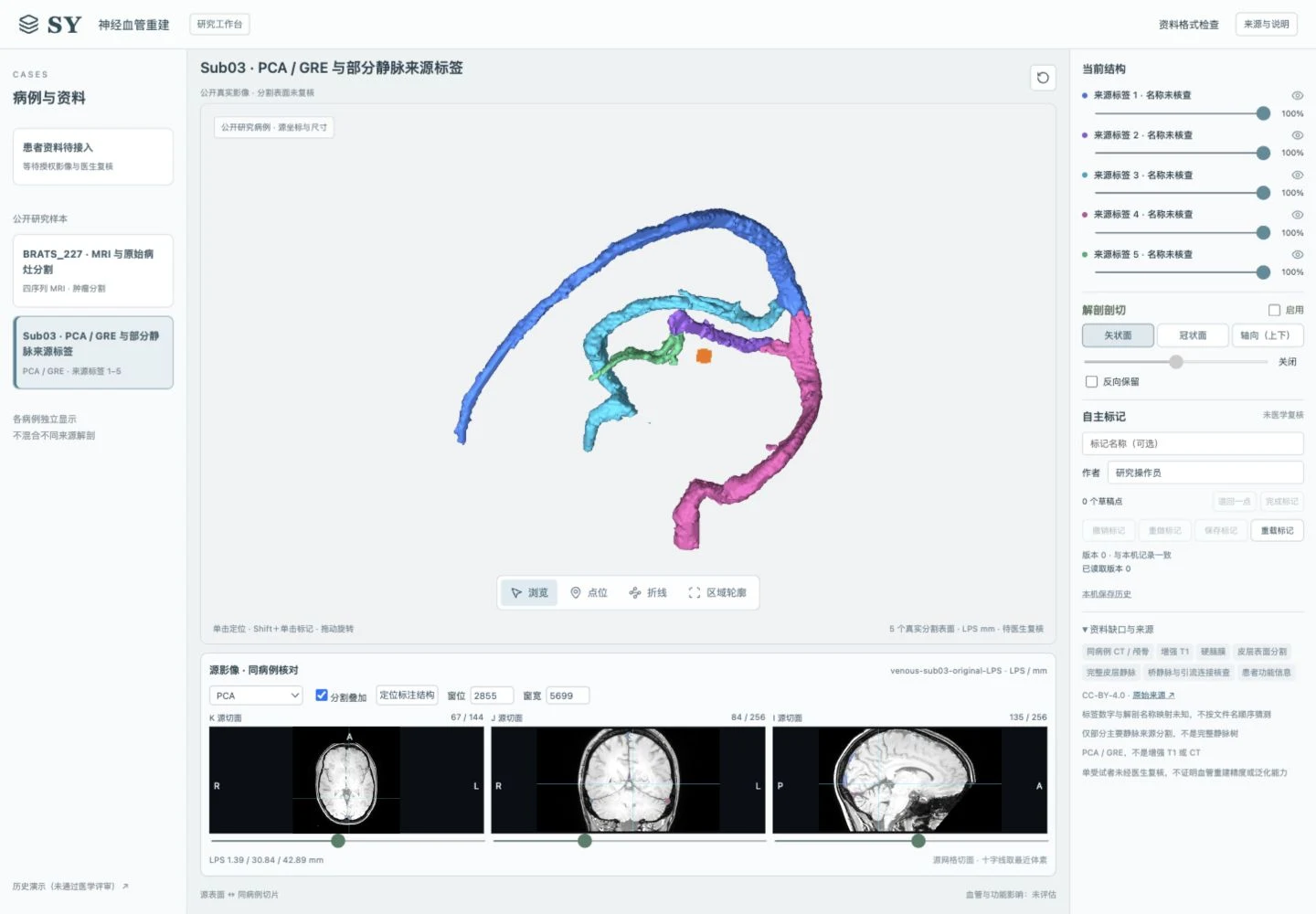
A surface view helps explain spatial relationships, while source images provide the context for checking them. The system places case selection on the left, surfaces and slices in the center, and display controls and annotations on the right.
- 01Select a source case
- 02Inspect segmentation surfaces
- 03Locate the source slices
- 04Record annotations
02 / INTERFACE & INTERACTION
How the interface supports the task
From a surface point to three slices
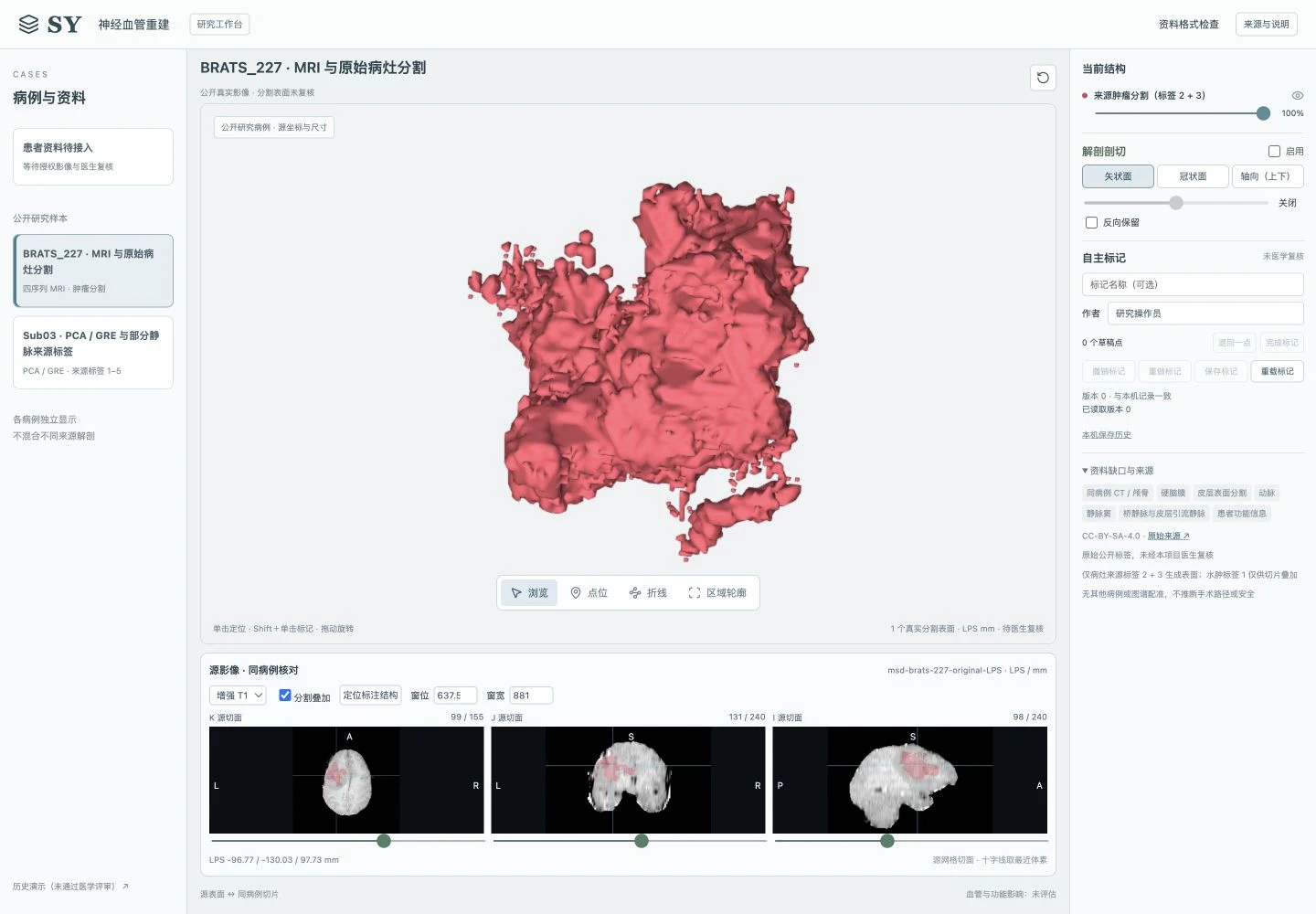
Picking a segmentation surface converts the selected point into case coordinates and updates three source planes. Sequence selection, window controls and segmentation overlays connect spatial inspection with image review.
Inspect individual layers
Each surface has independent visibility and opacity controls. Sagittal, coronal and axial clipping, with a reverse option, expose internal relationships. Rotation, zoom and camera reset support both overview and close inspection.
Annotations with coordinates and history
Point, polyline and region-outline tools record names, authors and geometry. Undo and redo adjust the current work; saved history records document versions. Each case keeps its own annotations.
03 / ENGINEERING NOTES
The engineering behind the interface
Separate volumes from surfaces
Python uses SimpleITK / VTK for images and segmentation surfaces. FastAPI exposes cases, assets, volumes and annotations. vtk.js renders surfaces in the browser, while React coordinates panels and interaction state.
Keep geometry independent of display
Case geometry uses LPS coordinates in millimeters. Camera and display changes do not rewrite source geometry. Coordinate conversion connects 3D picking to slice locations.
Save by case and revision
SQLite associates annotations with a case, geometry revision and document revision. Saves append versions; conflicting revisions preserve local edits and require an explicit reload rather than silently overwriting work.
MORE PROJECTS
More project notes
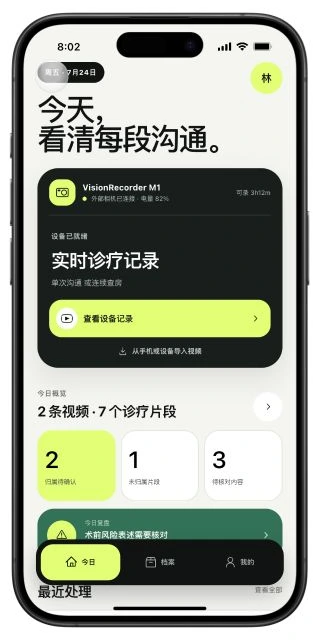
Video workflows · Mobile interaction
DoctorDefender
A mobile interaction workflow brings video segments, patient assignment, source text and review actions together.

Research platforms · Evidence organization
Academic Echo · 学术回声
Connect DOI lookup, metadata confirmation and discussion with interfaces and services built for scholarly expression and clear identity boundaries.